
 Company Profile
 Business Licenses & Corporate Certifications
 Trademarks & Brands
 Join Us
 International Commodity Trade and Economic Cooperation
 Enterprise Going Global
 Asset Operation
 Investment And Financing Management
Boundless Solar & Wind: Why China Is Doubling Down on Biomass? A Deep Dive into Energy “Complementarity”
Release time:2026-03-13 Page views:433
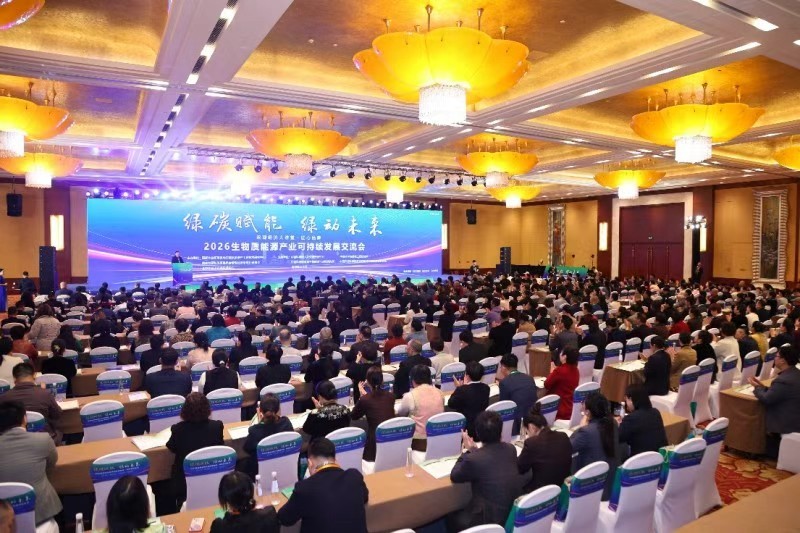
In January 2026, at the “Bioenergy Industry Sustainable Development Exchange Meeting” held at the Beijing Hotel International Convention Center, academician Ling Wen of the Chinese Academy of Engineering elaborated on the macro trends of the global energy transition, while Professor Song Chengmin from the National Development and Reform Commission’s School of Macroeconomic Management delivered an in-depth analysis of 2026 industrial policy directions. The conference sent a clear signal: during this critical period for the deepening implementation of China’s “dual carbon” strategy, the nation’s bioenergy industry is facing a historic opportunity to transform from traditional “solid waste treatment” into high-value “green fuels + new materials.”
I. Current Landscape of Bioenergy
Over the past two decades, China’s bioenergy industry has followed a development path primarily focused on power generation. With the phase-out of subsidy policies and rising pressure from raw material costs, the economic sustainability of a single power-generation model has faced challenges. However, technological breakthroughs and policy guidance are now driving a structural transformation. Three major product lines—biomass pellets, fuel ethanol, and marine methanol—are becoming the new growth engines for the industry.
1.1 Biomass Pellets: Accelerating Industrial Substitution
In 2026, the scale of China’s biomass pellet market is expected to reach approximately USD 11.89 billion (CNY 85.63 billion), with production volume increasing by 6.2% year-on-year and demand rising by 6.1%. In the industrial sector, the acceleration of coal-to-biomass conversion and policy requirements for co-firing biomass in coal-fired units are directly driving large-scale industry development. Leveraging its strong resource integration capabilities, China Everbright Greentech holds about 15% of the domestic market share, becoming an industry leader. Meanwhile, domestic manufacturers of biomass pelletizing equipment are mainly concentrated in Shandong, Jiangsu, Zhejiang, and Shanghai, forming industrial clusters such as the Shandong system, Jiangsu-Shanghai system, and Guangdong system.
1.2 Fuel Ethanol: Steady Development Led by Giants
As a mature representative of liquid biofuels, the fuel ethanol industry is in a period of structural adjustment. COFCO Biochemical (COFCO Technology) currently has a fuel ethanol production capacity of 1.3 million tons, corresponding to a domestic annual demand of approximately 3 million tons, giving it a market share of 32%–40%, firmly holding the leading position. The company’s fuel ethanol business accounts for 44%–45% of its total revenue, and it has established long-term, stable cooperative relationships with petrochemical enterprises, with mature sales channels. Notably, COFCO’s Anhui subsidiary, leveraging its comprehensive advantages, has become a profitability benchmark, generating annual profits exceeding USD 13.9 million (CNY 100 million).
In terms of cost control, leading companies build advantages through three key measures: a nationwide production base layout precisely matching regional raw material supply and market demand; continuous technological transformation and personnel structure optimization to improve per-capita efficiency; and leveraging large-scale procurement and industrial chain synergies to strengthen risk resistance. Looking ahead, the elimination of inefficient production capacity is an inevitable trend, and companies with cost, technology, and compliance advantages will dominate the industry.
1.3 Marine Methanol: The Blue Ocean of Green Shipping
In February 2026, China’s shipping industry reached a milestone—the successful maiden voyage of the “Chuangxin 19,” the country’s first 15,000-ton class methanol-only river-sea direct vessel. This marked a critical step in the commercial application of methanol fuel in China’s shipping sector. The vessel is equipped with a fully domestically developed CS8L21M methanol-only engine, utilizing advanced methanol direct in-cylinder injection technology, achieving a methanol substitution rate of over 90%. It is estimated that using green methanol can reduce CO₂ emissions by over 90%, nitrogen oxides by 60%, and sulfur oxides by 99%.
Around the same time, the first 3,000-ton class methanol-hybrid container ship in the Pearl River Basin commenced construction in Qingyuan, adopting a “methanol replenishment + electric drive” model. This retains the zero-emission advantages of electric ships while using methanol generator sets to solve the “range anxiety” of pure electric vessels.
Regarding fuel supply, in September 2025, Ningbo Zhoushan Port achieved the first ship-to-ship green methanol bunkering breakthrough, becoming one of the few international hub ports in China capable of supplying three types of green fuels: LNG, biofuels, and methanol. According to statistics from the China Nitrogen Fertilizer Industry Association, China holds a significant position in the global methanol supply chain—traditional methanol production accounts for 60% of the world’s total, and its share of green methanol projects is even higher, reaching 80%.

II. Coexistence of Bioenergy and New Energy
Society often mistakenly believes that bioenergy and new energy sources like wind and solar are in a “trade-off” relationship. However, from a national strategic perspective, they are actually complementary, coexisting, and synergistically enhancing each other as an organic whole.
2.1 Biomass Provides Stable Baseload, New Energy Compensates for Fluctuations
Wind and solar power are intermittent. In 2024, the proportion of wind and solar generation in China reached 28%, but their volatility caused a sharp increase in peak-shaving pressure on the power grid. Biomass power generation can operate continuously 24/7. At the Binhai Industrial Park in Yancheng, Jiangsu Province, a “biomass + PV + energy storage” multi-energy complementary system has been implemented. Biomass undertakes 65% of the baseload power, while wind and solar cover the remaining 35%, achieving 100% renewable energy supply and reducing the levelized cost of electricity (LCOE) to USD 0.058/kWh (CNY 0.42/kWh)—an 18% decrease compared to a pure wind-solar system. This confirms that biomass acts as a “stabilizer” for new energy.
2.2 Complementary Resource Distribution Supports Nationwide Energy Security
Wind and solar resources are concentrated in the northwest (e.g., Gansu, Inner Mongolia), while biomass feedstocks are spread across major agricultural provinces in the east and central regions. In 2024, installed biomass power generation capacity reached 42 GW (accounting for 8.5% of renewable energy generation), with East China accounting for 42%. Jiangsu and Shandong each have over 2.5 GW of installed capacity, effectively alleviating energy gaps in the east. In contrast, although 65% of northwest wind and solar power was transmitted outwards in 2024, long-distance transmission losses are significant, highlighting the advantage of biomass for “local consumption.”
2.3 Covering Areas New Energy Cannot Reach
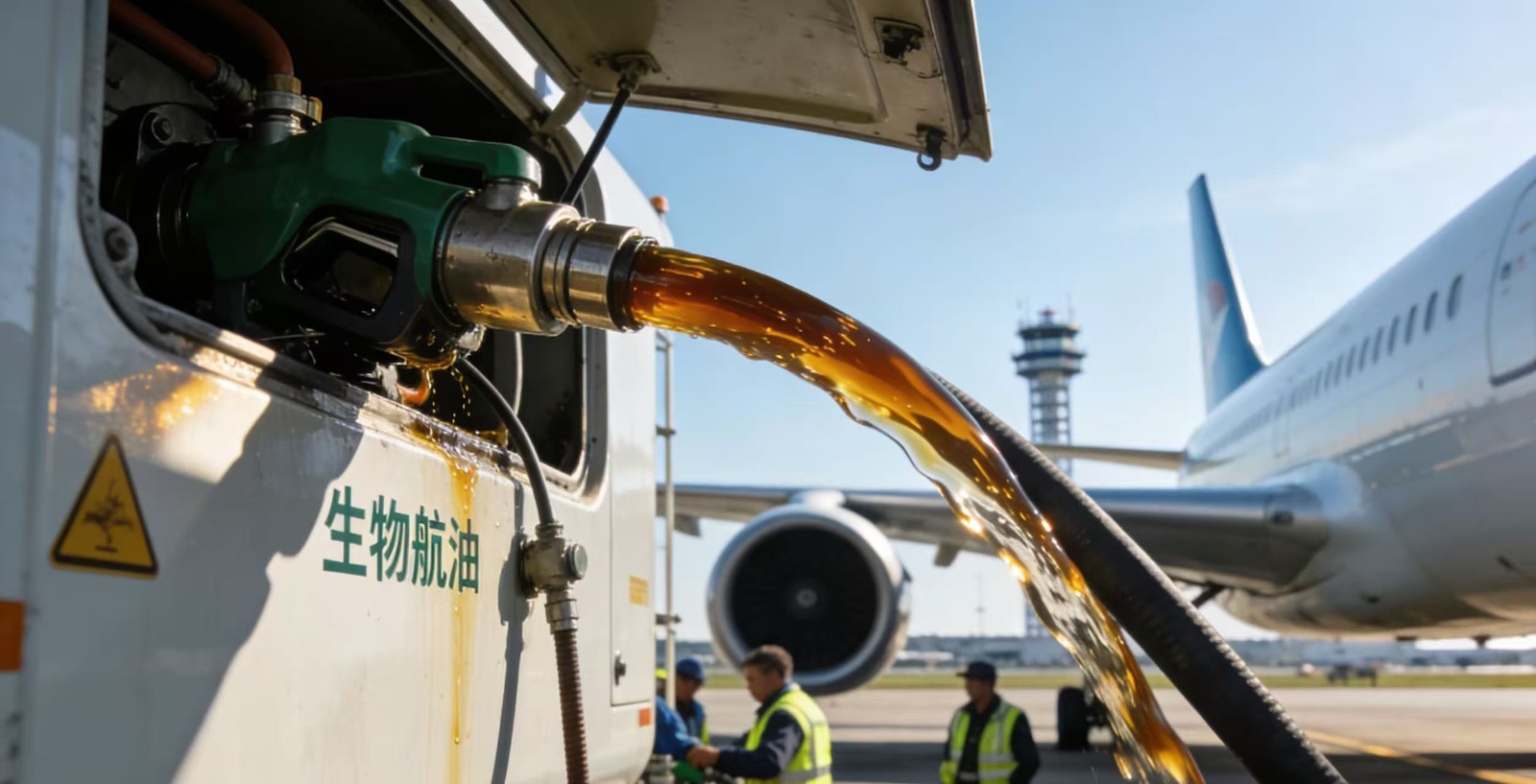
Electric vehicles are suitable for urban short-distance transport, but heavy-duty scenarios like aviation and ocean shipping are difficult to electrify. Bio-jet fuel (production reached 150,000 tons in 2024) has received international aviation certification. Sinopec’s bio-jet fuel project was blended at 10% in C919 test flights in 2024, reducing emissions by 28 tons per flight. Marine methanol fills the decarbonization gap for ocean shipping. In 2024, the penetration rate of biofuels in China’s transportation sector reached 3.5%, while new energy’s contribution in heavy transport was less than 0.5%, forming a complementary pattern where “new energy focuses on light transport, and biomass covers heavy scenarios.”
III. Development Trends in Bioenergy
3.1 Diversification and High-value Technological Pathways
The shift from single power generation to diversified utilization of “power generation + fuels + materials” is an inevitable direction for industry development. COFCO Biochemical’s bio-based new materials business (such as lactide and polylactic acid) exemplifies this trend. The company’s first-phase lactide project, with an initial capacity of 30,000 tons, is expected to commence production in the first quarter of 2026. In the future, it will extend into downstream polylactic acid applications based on market demand, completing the full bio-based new materials industry chain. These materials can replace traditional plastics to reduce white pollution and can also extend to high-end applications like 3D printing.
In the field of healthy sweeteners, COFCO Biochemical’s allulose project, using proprietary enzymatic catalysis technology, is expected to launch in the first quarter. It has already initiated testing cooperation with leading food and beverage companies, indicating significant market growth potential.
3.2 Deepening Industrial Integration
Bioenergy is deeply integrating with agriculture, forestry, environmental protection, and chemical industries. The “Bioenergy Industry Leading Talents Advanced Training Program” launched in early 2026 is specifically designed to cultivate versatile talents who understand technology, management, and policy. From field straw to green methanol, from fuel ethanol to bio-based new materials, the industrial chain is lengthening and value is increasing.
3.3 Market-oriented Policy Mechanisms
Professor Song Chengmin provided an in-depth analysis of the latest policy directions and support measures. Future policies will increasingly focus on market mechanisms such as carbon market access, green electricity certificate trading, and direct green power connections. Ma Xin, an auditor at the Chinese Academy of Agricultural Sciences’ Carbon Trading Certification and Verification Center, detailed the pathway for incorporating biomass carbon sinks into the CCER (China Certified Emission Reduction) market, opening new revenue channels for enterprises.
IV. The Multiple Missions of Bioenergy from a National Strategic Perspective
From a national strategic height, bioenergy carries multiple missions:
· Energy Security: Biofuels can reduce dependence on foreign oil. COFCO Biochemical, as one of the first enterprises in China to receive a fuel ethanol license, with its 1.3 million tons of capacity and 32% market share, provides strategic support for national transportation energy security.
· Rural Revitalization: Bioenergy is a natural link connecting “agriculture, rural areas, and farmers” with the energy industry. The “15th Five-Year Plan High-Quality Development Strategy Seminar” held in February 2026 was organized under the guidance of the China Association for Rural Development, aiming to promote bioenergy as a driver for comprehensive rural revitalization.
· “Dual Carbon” Strategy: Bioenergy has “negative emission” characteristics. Incorporating biomass carbon sinks into the CCER market provides a low-cost, measurable solution for carbon reduction.
· Green Shipping: The commercial application of methanol-powered vessels offers a feasible path for low-carbon transition in China’s inland river and coastal shipping. With the gradual commissioning of green fleets like the “Chuangxin 19” and the “river-sea direct” model, freight transit times from the coast to the upper and middle reaches of the Yangtze River will be significantly shortened, making the export route for “Made in China” goods smoother and lower in carbon.
China’s bioenergy has leaped from a “supplementary energy” to a national strategic linchpin. Its value lies in creating a “1+1 > 2” synergy with new energy: wind and solar provide incremental clean electricity, while biomass ensures baseload stability; new energy covers urban transport, while biomass fills gaps in shipping and aviation. In 2024, collaborative bioenergy and new energy projects covered 30 provinces across China, achieving annual emission reductions of 400 million tons, equivalent to creating 1.5 times the carbon sink capacity of the Greater Khingan forest.
In the future, with technological breakthroughs and policy improvements, bioenergy will upgrade from a “strategic pillar” to a “mainstay.” The nation needs to strengthen full-chain support covering “feedstock-technology-market”: establish a special bioenergy fund to promote commercialization of cellulosic ethanol technology; create a “biomass-carbon sink” trading mechanism to unlock ecological value; and deepen “Belt and Road” green cooperation to export Chinese standards. Only by adhering to symbiosis and co-prosperity can China build a resilient, diversified, and zero-carbon modern energy system, contributing a “Chinese solution” to the global energy transition.
 WeChat official
 Email login